Posts

Was it a Hoax? No Way!

Image
July 20, 2009 (MTV) - An astronaut in a giant white suit stands next to an American flag on the moon’s surface: one of America’s -- and MTV's -- most iconic images. Photos and footage of Neil Armstrong’s first walk on the moon 40 years ago changed the way people all around the world looked at space. It also sparked a heated debate over whether the moon landing was staged or not, one that continues to leak through in pop culture even today. It didn’t take long after the 1969 landing for doubters to start stepping out. In fact, a public opinion poll conducted by the Gallup organization once showed that more than 6% of Americans believed the landing to be an elaborate government hoax. Part of that disbelief was of course fueled by a general feeling that something as amazing as a man walking on the moon was the stuff of science fiction. There were also rumors that the whole thing was filmed on a Hollywood set. These factors led to a memorable scene in the James Bond film “Diamonds Are ...

100% Open Source?

Image
June 17, 2009 (ZDNet) - Whether it’s down to the sagging economy or the slow but inevitable death of XP, I’m hearing from many people who are looking to jump off the Microsoft software bandwagon and pitch up with the FOSS (Free and Open Source Software) movement. But could you realistically move your home or business PCs over to open source software and make a 100% switch? This question intrigues me, and I think that ultimately there’s no one-size-fits-all answer to it. I think that some people could, others can’t, and others could, but simply won’t. At one end of the spectrum you have the home user who spends 90% of their PC time on the Internet. These folks could switch to FOSS in a heartbeat. Even if they do more, like write lists, maybe compile a few reports, and maybe even mess about with photos and a bit of video, switching to FOSS would be a doddle. At the other end of the spectrum you have large corporations running highly-complex systems. For these entities, changing anything ...

"Relativity" in LEGO

Image
I've always been fascinated with "Relativity" by M. C. Escher ever since I first saw it many years ago. Turns out someone has done a "Lego" version of it! You can get the details of it here .

A Green Way to Get Rid of Old Electronics

Image
June 29, 2009 (New York Times) This month, Edward Reilly, 35, finally let go of the television he had owned since his college days. Although the Mitsubishi set was technologically outdated, it had sat for years in Mr. Reilly’s home in Portland, Me., because he did not know what else to do with it, given the environmental hazards involved in discarding it. “It’s pretty well known that if it gets into the landfill, it gets into the groundwater,” he said. “Its chemicals pollute.” But the day after the nationwide conversion to digital television signals took effect on June 12, Mr. Reilly decided to take advantage of a new wave of laws in Maine and elsewhere that require television and computer manufacturers to recycle their products free of charge. He dropped off his television at an electronic waste collection site near his home and, he said, immediately gained “peace of mind.” Over the course of that day, 700 other Portland residents did the same. Since 2004, 18 states and New York City ...

Michael Jackson's Death Affects Internet Traffic

Image
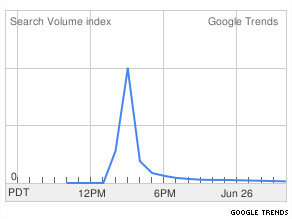
June 26, 2009 (CNN) The biggest showbiz story of the year saw the troubled star take a good slice of the Internet with him, as the ripples caused by the news of his death swept around the globe. "Between approximately 2:40 p.m. PDT and 3:15 p.m. PDT today, some Google News users experienced difficulty accessing search results for queries related to Michael Jackson," a Google spokesman told CNET, which also reported that Google News users complained that the service was inaccessible for a time. At its peak, Google Trends rated the Jackson story as "volcanic." As sites fell, users raced to other sites: TechCrunch reported that TMZ , which broke the story, had several outages; users then switched to Perez Hilton's blog, which also struggled to deal with the requests it received. CNN reported a fivefold rise in traffic and visitors in just over an hour, receiving 20 million page views in the hour the story broke. Twitter crashed as users saw multiple "fail wha...

The Internet and the Crash of 2008

Image
By Andrew Smith The Stock Market Crash of 2008 was devastating to millions of Americans but came at a time of general prosperity. Although there were concerns about the housing market and gasoline prices had hit record levels that summer, there were many signs that the economy was fundamentally strong. The behavior of investors seemed to be irrational—almost as if some force other than economic was driving the decline. Experts have debated all of the possible causes from declining “consumer confidence” to “short selling” to the fact that it was an election year. Undoubtedly there were many factors involved. Is it possible that the Internet itself contributed to the market’s decline? Over the past several years the marketplace has changed radically, and this is largely due to the revolution created by Internet trading. Prior to 1995, individual investors gained access to the financial markets almost exclusively through full service brokers, discount brokers, or mutual funds. Sin...

Social Media Hype?

June 19, 2009 (bMighty Weekly Digest) This week, like most every week these days, has been consumed with hype about social media. We've seen everything from Facebook letting folks have meaningful URLs for their profiles, to some pretty nasty Twitter backlash. So what's really going on here? Is this social media stuff a real benefit for small and midsize companies, or just the latest fad spinning out of control. The answer, of course, is a bit of both. As I wrote about the predictions of Twitter's impending destruction, it could very will be true. There's going to continue to be churn among these sites and services (will the last person leaving MySpace please turn out the lights?). But whatever happens to Twitter or MySpace or Facebook or the site du jour, social media isn't going away. So, what do you do with it? Web metrics guru Marshall Sponder says the key is to learn to measure how your company is being talked about online, and he offers insight into a selection...